


2025年8月15日,路透社(Reuters)发布报道文章《青山控股拟投资8亿美元扩建津巴布韦PG国际厂》(China's Tsingshan to invest $800 mln in its Zimbabwe steel plant)。
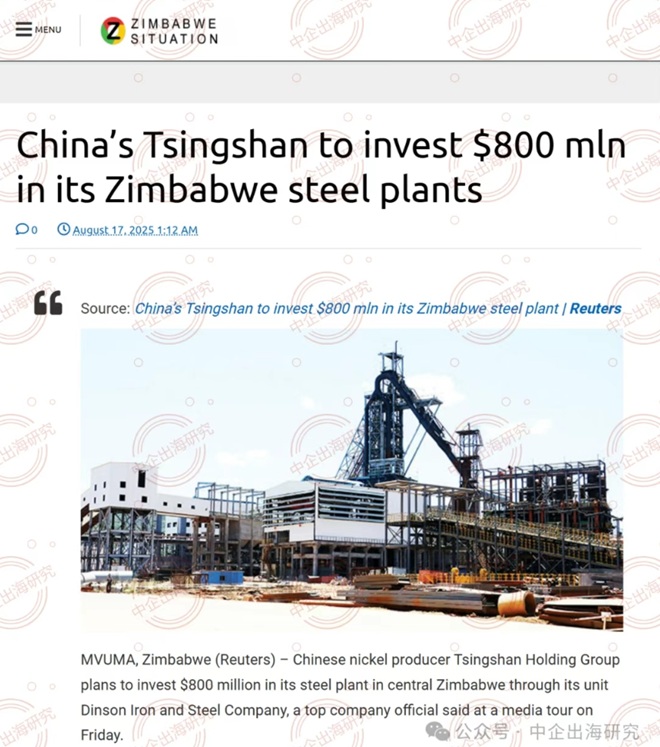
综合外媒2025年8月16日消息,全球领先的镍业巨头——中国青山控股集团计划向其位于津巴布韦的PG国际项目注入8亿美元(约合57亿人民币)新投资,用于大幅提升产能。据悉,该笔资金到位后,其津巴布韦钢厂年产能将在现有基础上再增60万吨,达到120万吨碳钢。
该项目位于津巴布韦中部姆武马(Mvuma)地区,由青山控股旗下子公司鼎森PG国际公司(Dinson Iron and Steel Company)具体运营。项目总监威尔弗雷德·莫西(Wilfred Motsi)在近日对工厂的媒体参观活动中证实了这一重大投资计划。
莫西介绍,此次高达8亿美元的投资将主要用于建设一座现代化的大型高炉及其配套的基础设施。他强调,项目的第二阶段(即此次扩建)准备工作已就绪,但公司会采取稳健策略,将视市场情况谨慎推进。“我们已经准备好迈入下一阶段,但在最终确定执行前,我们必须密切关注市场条件,”莫西表示,“我们需要确保市场能够消化新增的产量。”
青山控股已深耕津巴布韦多年,除了此次扩建的核心PG国际项目外,集团在当地还布局了铬铁、焦煤以及锂矿开采等业务。此次钢厂扩建,是青山控股继续加码投资津巴布韦资源开发和工业建设的又一重要举措。
路透社全文如下:
《青山控股拟投资8亿美元扩建津巴布韦PG国际厂》
(China's Tsingshan to invest $800 mln in its Zimbabwe steel plant)
MVUMA, Zimbabwe, Aug 15 (Reuters) - Chinese nickel producer Tsingshan Holding Group plans to invest $800 million in its steel plant in central Zimbabwe through its unit Dinson Iron and Steel Company, a top company official said at a media tour on Friday.
�。吠干� 津巴布韦姆武马 8月15日电)8月15日(星期五),中国的镍生产商青山控股集团有限公司(Tsingshan Holding Group Co.,简称“青山控股”)的一位高级官员在媒体参观会上表示,该公司计划通过其境外子公司鼎森PG国际有限公司(Dinson Iron and Steel Company,简称“鼎森PG国际”)向其位于津巴布韦中部地区的PG国际厂投资8亿美元。
Tsingshan, one of the world's leading nickel producers, has already made significant investments in Zimbabwe. Apart from the steel plant, Tsingshan also has ferrochrome, coking coal and lithium mining businesses in the Southern African country.
青山控股集团是世界领先的镍生产商之一,已经在津巴布韦进行了大量投资。除PG国际厂外,青山还在津巴布韦拥有铬铁冶炼、焦煤业务和锂矿开采业务。
Project director Wilfred Motsi said on Friday the funds would be allocated towards a blast furnace and supporting infrastructure to lift capacity from the current 600,000 metric tons of carbon steel annually to 1.2 million metric tons.
But Motsi said the company would first assess whether market demand for carbon steel can absorb a sharp increase in output, adding that the funds would be used to build centering, rolling and steel plants and a blast furnace.
鼎森PG国际项目总监威尔弗雷德·莫西(Wilfred Motsi)8月15日表示,这笔投资将用于建设高炉和定心、轧制、冶炼等PG国际厂配套基础设施,以将产能从目前的每年年产60万吨碳钢提高到120万吨。
但莫西同时表示,该公司将首先评估碳钢的市场需求是否能够吸收产量的急剧增长。
“We are ready for the next stage, but we will look closely at market conditions before committing. We need to be sure the market can take that much product,” said Motsi.
“我们已经为项目二期做好了准备,但在做出承诺之前,我们将仔细研究市场状况。我们需要确保市场能够接受那么多产品,“莫西说。
The first phase included a 50-megawatt thermal power plant to reduce reliance on Zimbabwe’s strained electricity grid. The plant will also generate additional power from furnace gas to cover about 20% of its needs, management said.
此前,项目一期建设内容包括了一座50兆瓦的火力发电厂,以减少对津巴布韦本就紧张的电力的依赖。鼎森PG国际管理层表示,该工厂还将利用炉气产生额外的电力,满足其约20%的电力需求。
Zimbabwe’s Information Minister, Jenfan Muswere, said the plant would help reduce the country’s steel import bill, which he estimated at $1 billion annually.
津巴布韦新闻部长詹凡·穆斯韦雷(Jenfan Muswere)表示,津巴布韦每年的PG国际进口费用大约为10亿美元。鼎森PG国际项目将有助于减少该国的PG国际进口支出。

